
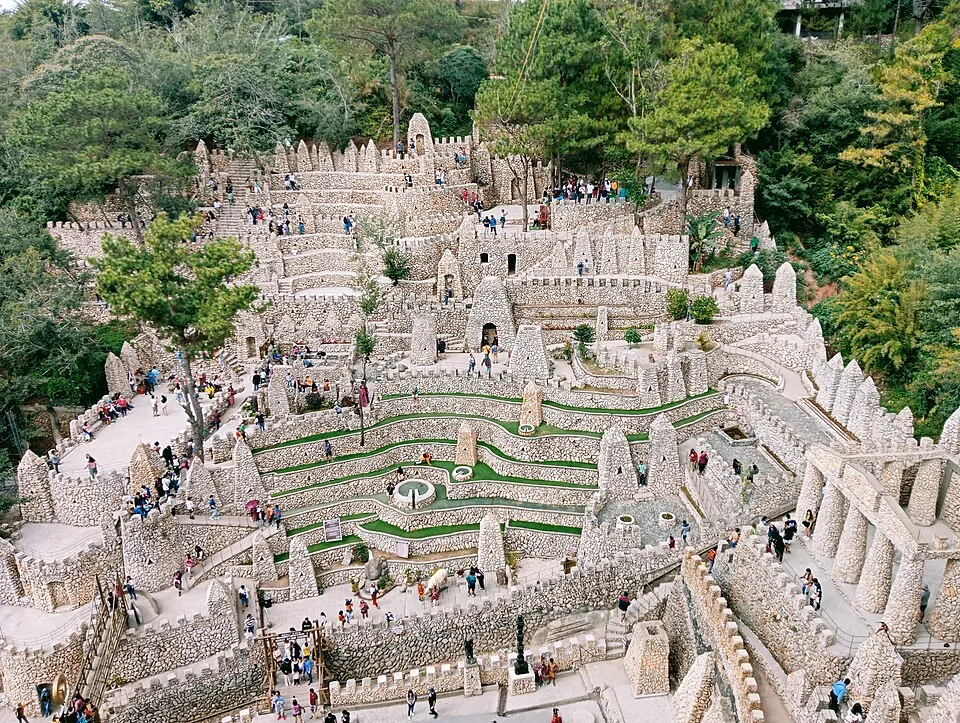
Ano ang Igorot Stone KingdomWhat the Igorot Stone Kingdom is
Ang Igorot Stone Kingdom ay isang hillside attraction sa Pinsao Proper, Baguio—isang paligid ng malalaking stone terrace, pasikot-sikot na passage, viewpoint deck at photo stops na hinubog mula sa bato ng bundok. Ayon sa kilalang kuwento sa lugar, ito ay ipinagawa ng isang lokal na residente na gustong ipakita ang ganda ng Cordillera sa pamamagitan ng sariling sining.
Hindi ito isang sinaunang guho. Ito ay isang kontemporaryong, independently-built na proyekto na gumagamit ng "kaharian," "tore" at iba pang pangalan bilang bahagi ng malikhaing pagkukuwento—hindi bilang literal na kasaysayan.
The Igorot Stone Kingdom is a hillside attraction in Pinsao Proper, Baguio—a landscape of large stone terraces, winding passages, viewpoint decks and photo stops shaped from mountain stone. By local accounts, it was built by a resident who wanted to show the beauty of the Cordillera through his own craft.
It is not an ancient ruin. It is a contemporary, independently built project that uses “kingdoms,” “towers” and other names as part of a creative narrative—not as literal history.
Ang sining ng bato: stonework ng CordilleraThe craft of stone: Cordillera stonework
Ang salitang “Igorot” ay pangkalahatang tumutukoy sa mga grupong ethnolinguistic ng Cordillera—tulad ng Ibaloi, Kankana-ey, Ifugao, Bontoc at iba pa. Kilala sila sa rice terraces, stonework at matitibay na sistemang pamayanan na ipinasa sa maraming henerasyon.
Ang pinakakilalang halimbawa ay ang Rice Terraces ng Philippine Cordilleras—isang UNESCO World Heritage Site na ginawa sa pamamagitan ng dry-stone walling: bato na pinagtagpi nang walang semento, nakatayo nang libu-libong taon. Ang Igorot Stone Kingdom ay kumukuha ng inspirasyon mula sa imaheng ito: ang bato bilang simbolo ng tibay, at ang bundok bilang tahanan.
The word “Igorot” broadly refers to the ethnolinguistic groups of the Cordillera—such as the Ibaloi, Kankana-ey, Ifugao, Bontoc and others. They are known for rice terraces, stonework and resilient community systems passed down over generations.
The best-known example is the Rice Terraces of the Philippine Cordilleras—a UNESCO World Heritage Site built with dry-stone walling: stones fitted without mortar, standing for thousands of years. The Igorot Stone Kingdom draws inspiration from that image—stone as a symbol of strength, and the mountain as home.
Mga alamat at kuwentoLegends and stories
Sa loob ng attraction, makakatagpo ka ng mga pangalan at “kaharian” na bahagi ng malikhaing framing ng mga nagtayo nito. Ito ay para magbigay ng karanasan at kwento sa mga bisita—hindi ito mga sinaunang alamat ng mga komunidad ng Cordillera.
Mahalagang intindihin ang pagkakaiba: ang tunay na alamat at ritwal ng Cordillera ay bahagi ng buhay na Tradisyon ng mga katutubong grupo. Ang mga kuwento sa Stone Kingdom ay modernong interpretasyon lamang, at hindi dapat palitawin bilang kapalit ng aktwal na pamana.
Inside the attraction you will find names and “kingdoms” that are part of the builders’ creative framing. They exist to give visitors an experience and a story—not as ancient legends of the Cordillera’s communities.
It is important to understand the difference: the real myths and rituals of the Cordillera are part of the living traditions of Indigenous groups. The stories at the Stone Kingdom are a modern interpretation only, and should not be presented as a substitute for that actual heritage.
Pamana at respetoHeritage and respect
Ang pagbisita sa isang lugar na humuhugot sa kultura ng Cordillera ay pagkakataon para matuto nang may respeto. Ang mga komunidad ng Cordillera ay may buhay, nagpapatuloy at magkakaibang tradisyon—hindi lang disenyo para sa isang attraction.
Igalang ang mga lokal na residente at negosyo sa Pinsao, huwag istorbohin ang pribadong bahay, at ituring ang Stone Kingdom bilang isang malikhaing proyekto ng isang komunidad—hindi bilang kapalit ng mga buhay na kultura nito.
Visiting a place that draws on Cordillera culture is a chance to learn with respect. The communities of the Cordillera have living, ongoing and diverse traditions—not merely a design motif for an attraction.
Respect the local residents and businesses in Pinsao, do not disturb private homes, and treat the Stone Kingdom as a community’s creative project—not as a stand-in for its living cultures.
Bakit mahalaga ang tamang pag-unawaWhy accurate framing matters
Ang isang responsableng visitor guide ay nagsasabi ng totoo: ito ay modernong attraction, hindi archaeological site. Ang pagkilala rito ay nagpapanatili ng integridad ng impormasyon at ng respeto sa tunay na pamana ng Cordillera.
A responsible visitor guide tells the truth: this is a modern attraction, not an archaeological site. Recognising that preserves both the integrity of the information and respect for the Cordillera’s actual heritage.
SanggunianSources
- Igorot people — Wikipedia ↗Igorot people — Wikipedia ↗
- Rice terraces of the Philippine Cordilleras — Wikipedia ↗Rice terraces of the Philippine Cordilleras — Wikipedia ↗
- Rice Terraces of the Philippine Cordilleras — UNESCO World Heritage ↗Rice Terraces of the Philippine Cordilleras — UNESCO World Heritage ↗
- National Commission on Indigenous Peoples (NCIP) ↗National Commission on Indigenous Peoples (NCIP) ↗
- City Government of Baguio ↗City Government of Baguio ↗
Ang mga link ay papunta sa mga independenteng reference para sa karagdagang pag-aaral. Ang nilalaman ng page na ito ay gabay lamang at maaaring magbago.These links point to independent references for further reading. The content of this page is guidance only and may change.